19475
Overview
Lung cancer patients treated with the blockbuster drug Osimertinib (Tagrisso) eventually develop resistance. We identified a novel MERTK-dependent escape mechanism, that occurs even in the absence of new mutations and is estimated to account for more than 60% of resistance cases. Bis3, a bispecific EGFR/MERTK antibody, promotes degradation of both receptors and works synergistically with TKIs to achieve durable tumor response.
Applications
- First-line combination therapy with EGFR TKIs to prevent emergence of resistance
- Second-line therapy for patients relapsing on TKIs
Differentiation
- Simultaneous degradation of EGFR and MERTK
- Single therapeutic molecule, replacing combined anti-EGFR and anti-MERTK monoclonals
- Efficacy across EGFR mutations including Exon-20
Development Stage
- Bis3 demonstrated dual EGFR/MERTK degradation and robust suppression of proliferation and survival in drug-tolerant persisters in vitro
- In 3D spheroids, Bis3 + osimertinib strongly inhibited growth across EGFR mutations
- In vivo (xenografts and PDXs), Bis3 + TKI markedly delayed relapse, including in exon-20 models.
- Human IgG1 CrossMab format; ready for advancement toward IND-enabling studies
- Ongoing studies are addressing efficacy of Bis3 on various exon-20 mutations as well as EGFR-C797S animal models.
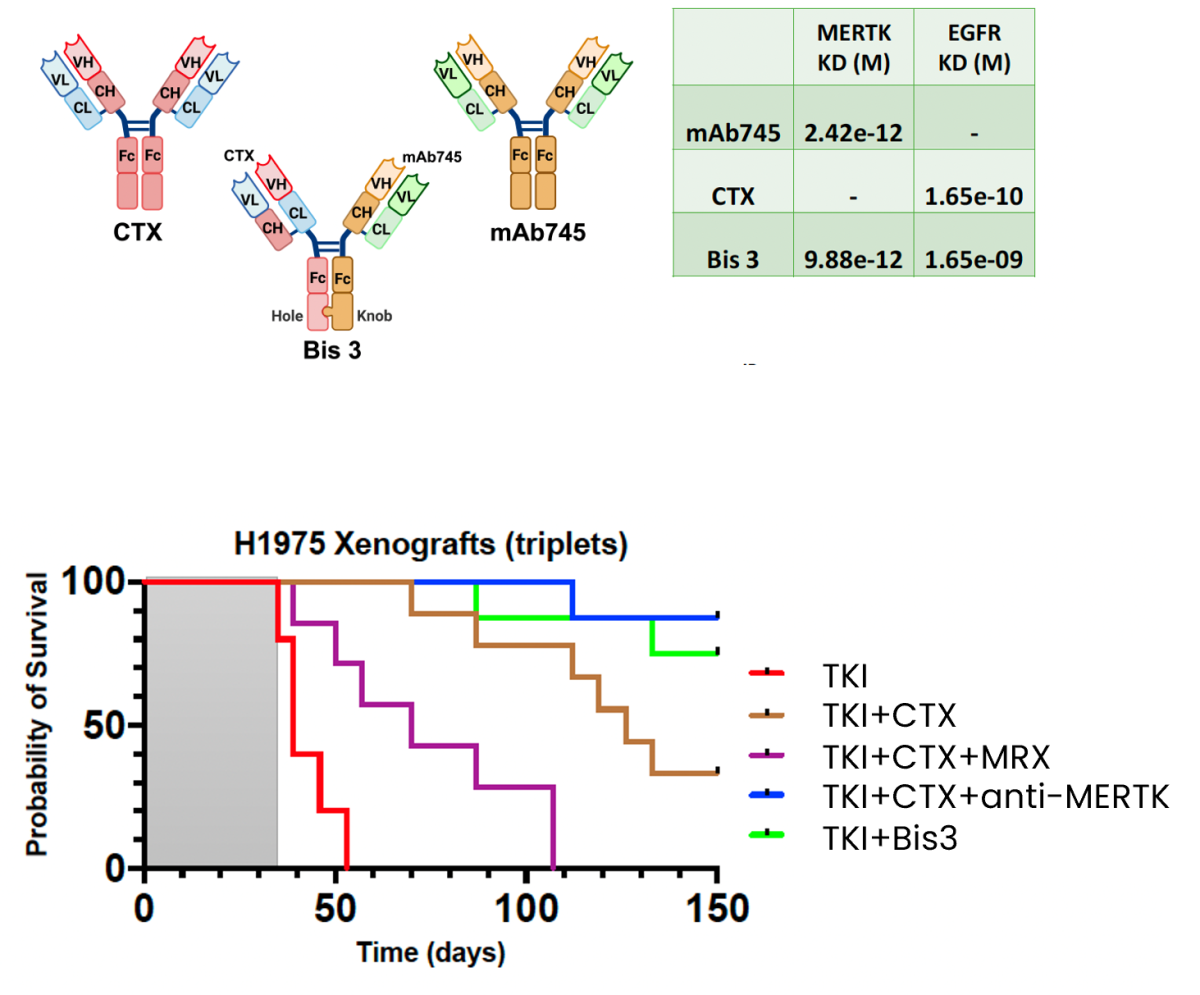
TKI: Osimertinib
Cetuximab (CTX): anti-EGFR antibody
MRX-small molecule MERTK inhibitor
H1975 cells carry EGFR T790M mutation
Reference

Contact for more information