Mr. David Assia
More info
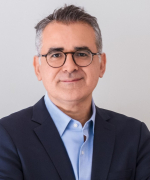
David Assia is a serial entrepreneur and angel investor, being one of the pioneers of the vibrant Israeli high tech software industry. David founded multiple global companies and listed them on either NASDAQ or TASE (Tel-Aviv Stock Exchange).
David is the Chairman of iAngels, a leading crowd funding platform and is also the Chairman of Biocatch, the Cognitive Authentication Biometrics Company. David is actively involved as a lead angel and a director in multiple high tech companies. David runs his family's, privately held, investment company, Nadyr Investments Ltd.
David is highly involved in educational institutions such as the Weizmann Institute of Science, the Israel Education Fund and Yeda Research and Development, the technology transfer office of the Weizmann Institute.
David is also on the boards of RR Media (RRSAT), a media services company, The First International Bank of Israel and the Israel Association of Electronics and Software.
In 1980, David co-founded Mashov Computers, the leading micro-computer software company in Israel, being one of the first high tech companies to be listed 3 years later on TASE.
In 1986, he co-founded Magic Software, where he served as either Chairman or CEO until 2007. Magic Software is a global international software company with world class innovative development and integration platforms. Magic Software was the first Israeli Software Company to be listed on NASDAQ (MGIC).
David was a major investor, either directly or through one of the above companies , in Aladdin Knowledge System, eventually merged into Safenet (Gemalto), Babylon.com, Walla Communications, Paradigm Geophysical, AOD Software and many others.
Since 2007, David has been involved in multiple start-ups as either an angel investor, chairman or mentor, such as in eToro, the world's leading social investment network.

Prof. Alon Chen
Prof. Alon Chen assumed the position of the 11th president of the Weizmann Institute of Science on Dec. 1, 2019. He was Head of the Department of Neurobiology from 2016-2019. He was also Managing Director and Scientific Member at the Max Planck Institute of Psychiatry, Munich, Germany and served as the Head of the Max Planck Society - Weizmann Institute of Science Laboratory for Experimental Neuropsychiatry and Behavioral Neurogenetics. He is an adjunct Professor at the Medical School of the Ludwig Maximilian University, Munich.
Born in Israel in 1970, Prof. Chen received a BSc in Biological Studies, with distinction, from Ben-Gurion University in 1995, and a PhD from the Weizmann Institute of Science in 2001 (Direct PhD Program, with distinction). During his PhD studies, Prof. Chen also received an MBA from Ben-Gurion University. He was a postdoctoral fellow at the Salk Institute for Biological Studies in California, where he started researching stress. In 2005, he joined the faculty of the Weizmann Institute, in the Department of Neurobiology. At the Weizmann Institute, he is the incumbent of the Vera and John Schwartz Professorial Chair in Neurobiology.
Prof. Chen’s research focuses on the neurobiology of stress, particularly the mechanisms by which the brain regulates the response to stressful challenges and how this response is linked to psychiatric disorders. The collective long-term goal of his research is to elucidate the pathways and mechanisms by which stressors are perceived, processed, and transduced into neuroendocrine and behavioral responses under healthy and pathological conditions.
His lab has made significant discoveries in the field, including fundamental aspects of the organism’s stress response and actions that link specific stress-related genes, epigenetic mechanisms, and brain circuits with anxiety disorders, depression, eating disorders, and the metabolic syndrome. Prof. Chen and his team use both genetic mouse models and human patients to ultimately create the scientific groundwork for therapeutic interventions to treat stress-related behavioral and physiological disorders.
Over the years in his various scientific and administrative leadership roles, Prof. Chen has worked extensively with scientific boards, executive boards, elected officials, alumni, donors, and the community at large, to advance the mission of the institutions in which he is involved. On many occasions, Prof. Chen has presented their visions, missions, and values to internal and external stakeholders. He has also been responsible for approving and overseeing institutional and departmental budgets and for securing external funding support. Prof. Chen is known for his excellent communication and interpersonal skills, strong leadership aptitude, and the ability to identify opportunities and to convert challenges into innovative solutions.
He is the recipient of both the Rothschild and Fulbright fellowships. Upon his joining the Weizmann Institute faculty, he received the Alon Fellowship, the most prestigious Israeli fellowship for returning scientists.
Prof. Chen is married with two children and has a keen interest in science education .

Weizmann - Top 25 Universities
Weizmann Institute Recognized for High Performance by U-Multirank
U-Multirank, a leading European initiative that ranks universities worldwide based on a number of key performance parameters, has recognized the Weizmann Institute of Science as a 'Global Top-25 performer' in 2019, in two key categories: Top cited publications and the number of patents awarded. According to U-Multirank, the Weizmann Institute of Science is one of the top 25 universities in the world in both categories.

Stem Cells Provide COVID-19 Relief
A Stem of Support: PLX Stem Cells Provide COVID-19 Relief
Pluristem was founded in 2001 by Shai Meretzki of the Technion, who made use of a stem cell patent which was developed during his Ph.D studies, under the supervision of Dr. Shosh Merchav, together with Professors Dov Zipori and Avinoam Kadouri from the Weizmann Institute of Science

Breaking New Ground in Head Injury Treatment
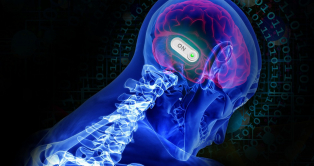
Prof Alon Harmelin and Dr. Slava Kalchenko, two Weizmann Institute scientists, developed TOVA – a innovative imaging system that can diagnose and monitor subdural hematomas frequently caused by head injuries. TOVA is a lightweight wearable headgear that connects to a mobile device, which will allow physicians to monitor their patients' conditions from afar. TOVA's groundbreaking technology includes infrared light and radiofrequency signals, coupled with a unique algorithm that was developed using an AI machine learning method. Together with neurologist Dr.

COVID-19 Research Cooperation
The Weizmann Institute and the Institute for Biological Research join hands to advance COVID-19 research.
The Coronavirus pandemic has prompted relevant responses from organizations from countless market and industry sectors – including scientific research institutions.

Weizmann Race for COVID 19 Drug
המרוץ אחר התרופה לקורונה: הצצה נדירה למעבדות של מכון וייצמן
מאז פרוץ מגפת הקורונה במכון ויצמן שברחובות מתנהלת מלחמה נגד הנגיף, במטרה למצוא כמה שיותר מהר חיסון או תרופה שתחזיר לציבור את החיים שהיו לפני המחלה. פגשנו שני פרופסורים מומחים, כל אחד בתחומו, שמספרים על תנאים לא קלים, חוסר בתקציב – אבל גם על פיתוחים משמעותיים שעד כה השיגו
תוצאות חיוביות.