
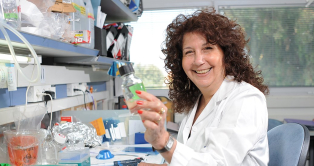
Meet Prof. Adi Kimchi, a principal investigator at the Molecular Genetics department.
The Kimchi Lab studies programmed cell death (PCD), an intricate molecular network governing a cell's decision to live or die. The lab aims to uncover new PCD targets and ultimately identify points of vulnerability in human disease amenable to therapeutic intervention.
Discover more about the research being done at the Kimchi Lab in our newsletter:

Protein comes in many shapes and forms, from meat and dairy to beans and bugs!
Yes, you read that correctly, bugs.
With the world facing an unprecedented food crisis, the food-tech space has taken an interest in using bugs as an alternative source of protein. Bugs not only offer high nutritional value, they also produce fewer greenhouse gasses, emit less ammonia than farm animals and take up less space, water, and land than traditional sources of protein.

The race to build the next generation of computers is on!
Israel's leading #QuantumComputing experts recently spoke in a panel during Calcalist כלכליסט Innovation Week. Amongst the speakers were Gil Semo from Quantum Source Labs Ltd and Dr. Ruti Ben Shlomi from LightSolver, two notable spinoffs of Yeda.
Learn more about the future of quantum computing:
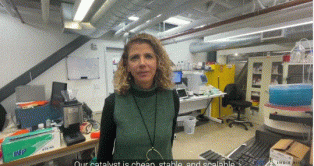
Decentralized low-cost emissions-free ammonia via electro catalytic reaction of water and air.
Decentralized low-cost emissions-free ammonia via electro catalytic reaction of water and air.
NitroFix, a spinoff company of Yeda, brings in a stable and scalable catalyst to an electrochemical process that can take place at room temperature, no heat and pressure needed.
Nitrofix allows on-site generation of ammonia for fertilizers and emerging use cases in fossil-free maritime fuels. Emissions-free ammonia is essential to decarbonize this legacy industry that burns 3% of the world’s natural gas.
Yeda's Newsletter - Jan 2022
The first edition of our newsletter is dedicated to some of our key highlights in 2021. The past year was a record year for licensing agreements. In addition, many potential deals were added to our pipeline, and we look forward to seeing many of them materialize in 2022.
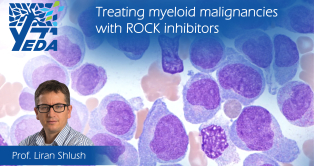
Did you know that the mortality rate in acute myeloid leukemia (AML) is 90% when diagnosed after the age of 65?
With no preventative therapy currently available for pre-leukemic individuals, that number is alarming. However, a group led by Professor Liran Shlush at the Weizmann Institute of Science has found that treatment with ROCK inhibitors can inhibit the growth of pre-leukemic mutated cells. This in turn, prevents disease onset.
This breakthrough could ultimately change the course of AML.
Discover more in our latest newsletter:

IndieBio San Francisco - Batch 13 Demo Day is taking place tomorrow (January 19).
IndieBio San Francisco - Batch 13 Demo Day is taking place tomorrow (January 19).
Join some of the top curated startups in climate tech, biotech and deep tech, including Yeda spinoff company NitroFix.
NitroFix was established based on research done at the laboratory of Professor Ronny Neumann from the Faculty of Chemistry at the Weizmann Institute of Science. It is the world's first proprietary electrolyzer that produces green ammonia directly from nitrogen and water, without the need for hydrogen.
Interested in learning more? Register online for free:
NITROFIX
On a mission to reduce the global carbon footprint! Ammonia is the second-largest global chemical product. It is being used mainly for agricultural fertilizers (80%), but also as industrial materials, refrigerants, and additives.
Yeda's Newsletter - Jan 2023
Looking back over the past 12 months, we can confidently say that 2022 was a successful year for Yeda. In the course of the past year, we have completed a series of important licensing deals for technologies that have emerged from all campus faculties, many of which have led to the formation of new entities.

Something exciting is happening in the world of Quantum Computing!
Something exciting is happening in the world of Quantum Computing!
Last week, the Israel Innovation Authority announced the formation of the largest consortium in its history, with a three-year budget of NIS 115 million. Weizmann Institute of Science, professor Roee Ozeri is amongst the leading academic entities supporting the development.
Pages
